Understanding Payment Processing APIs: A Complete Guide for Modern Businesses

James Whitfield
26 June 2026
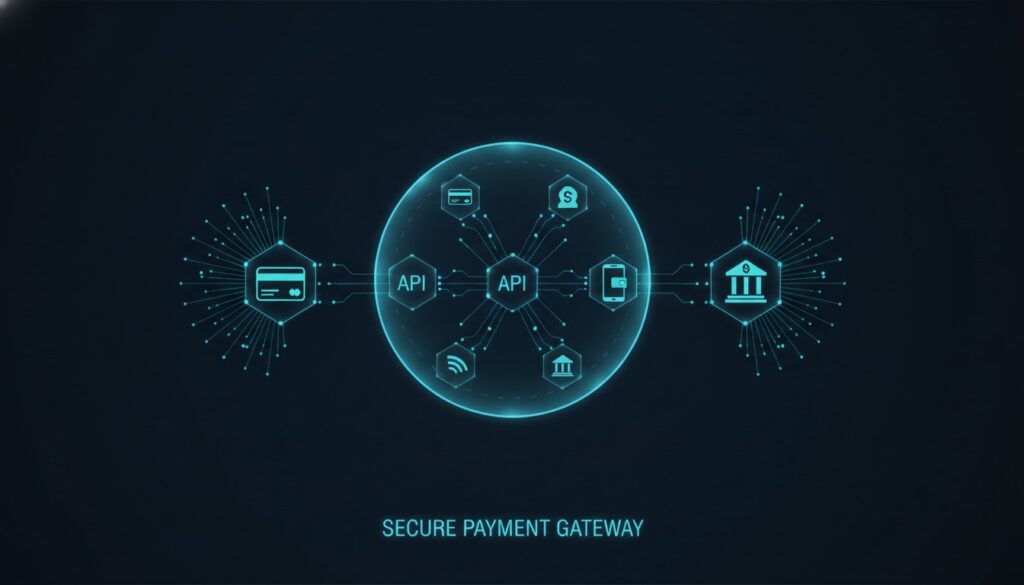
Understanding Payment Processing APIs: A Complete Guide for Modern Businesses
In today’s digital-first economy, the ability to accept payments seamlessly is no longer a luxury — it’s a fundamental requirement. Whether you’re running an e-commerce store, a SaaS platform, a mobile app, or a subscription-based service, payment processing APIs are the invisible engine that powers every transaction your customers make.
But what exactly are payment processing APIs? How do they work under the hood? And how do you choose the right one for your business?
In this comprehensive guide, the sso-tsyts team breaks down everything you need to know about payment processing APIs — from the basics of how they function to advanced strategies for integration, security, and optimization. By the end, you’ll have a clear roadmap for selecting and implementing the payment infrastructure that will drive your business forward.
What Is a Payment Processing API?
At its core, a Payment Processing API (Application Programming Interface) is a set of protocols, tools, and definitions that allows your software application to communicate with a payment gateway or payment processor. Think of it as a translator that sits between your website or app and the financial institutions that handle money movement.
When a customer clicks “Pay Now” on your checkout page, here’s a simplified version of what happens behind the scenes:
- Your application collects the payment details (card number, expiration date, CVV, etc.).
- The API securely transmits this data to the payment gateway.
- The payment gateway forwards the information to the acquiring bank.
- The acquiring bank communicates with the card network (Visa, Mastercard, etc.).
- The card network routes the request to the issuing bank (the customer’s bank).
- The issuing bank approves or declines the transaction.
- The response travels back through the chain to your application — all in a matter of seconds.
Key Insight: A well-designed payment API abstracts away this complexity, giving developers a clean, simple interface to work with while handling the heavy lifting of encryption, compliance, and routing behind the scenes.
Without payment processing APIs, businesses would need to build direct integrations with banks and card networks — a monumental and impractical task for most organizations.
How Payment Processing APIs Work: The Technical Foundation
Understanding the technical architecture of payment APIs helps you make better decisions about which solutions to adopt and how to integrate them effectively.
RESTful Architecture
Most modern payment APIs follow REST (Representational State Transfer) principles. This means they use standard HTTP methods to perform operations:
- `POST /payments` — Create a new payment
- `GET /payments/{id}` — Retrieve payment details
- `PUT /payments/{id}` — Update a payment
- `DELETE /payments/{id}` — Cancel or refund a payment
“`json
POST /v1/payments
Content-Type: application/json
Authorization: Bearer skliveyourapikey
{
“amount”: 4999,
“currency”: “usd”,
“paymentmethod”: “pmcardvisa”,
“description”: “Premium subscription – Monthly”,
“metadata”: {
“customerid”: “cust12345″,
“orderid”: “ord67890″
}
}
“`
The API responds with a JSON object containing the transaction status, a unique transaction ID, and other relevant details.
Webhooks and Asynchronous Processing
Not all payment events happen synchronously. Many payment APIs use webhooks — HTTP callbacks that notify your application when specific events occur. For example:
- Payment succeeded — Trigger order fulfillment
- Payment failed — Notify the customer and retry
- Subscription renewed — Update the customer’s access
- Chargeback initiated — Alert your fraud team
Tokenization
One of the most important concepts in payment API security is tokenization. Instead of storing sensitive card data on your servers (which creates enormous liability), the API replaces card details with a unique, non-sensitive token. This token can be used for future transactions without ever exposing the actual card number.
Pro Tip: Always use tokenization. Storing raw card data not only violates PCI DSS compliance requirements but also puts your business at significant risk of data breaches and the associated legal and financial consequences.
Key Features to Look for in a Payment Processing API
Not all payment APIs are created equal. When evaluating options for your business, consider these essential features:
1. Multi-Currency and Global Support
If your business serves international customers, you need an API that supports multiple currencies and local payment methods. Customers in Europe may prefer SEPA direct debit, while customers in Asia might favor digital wallets like Alipay or GrabPay.
What to look for:
- Support for 100+ currencies
- Automatic currency conversion
- Local payment method integrations
- Compliance with regional regulations (PSD2 in Europe, RBI guidelines in India, etc.)
2. Robust Security and Compliance
Security is non-negotiable in payment processing. Your chosen API should provide:
- PCI DSS Level 1 compliance — The highest level of payment security certification
- 3D Secure (3DS) authentication — Adds an extra verification step to reduce fraud
- End-to-end encryption — Protects data in transit
- Fraud detection tools — Machine learning-based systems that flag suspicious transactions
- Tokenization — As discussed above
3. Comprehensive Documentation and Developer Experience
The best payment APIs offer exceptional developer documentation that includes:
- Clear, well-organized API references
- Code samples in multiple programming languages (Python, JavaScript, Ruby, PHP, Java, etc.)
- Sandbox/test environments for safe experimentation
- Interactive API explorers
- Detailed error codes and troubleshooting guides
Remember: A payment API is only as good as its documentation. If your developers can’t integrate it quickly and correctly, even the most feature-rich API becomes a liability.
4. Flexible Pricing Models
Payment API pricing varies significantly. Common models include:
- Percentage-based fees (e.g., 2.9% + $0.30 per transaction)
- Flat-rate pricing (fixed fee per transaction regardless of amount)
- Interchange-plus pricing (interchange fee + fixed markup)
- Tiered pricing (different rates based on transaction volume)
5. Scalability and Reliability
Your payment infrastructure must handle traffic spikes — think Black Friday, product launches, or viral marketing moments. Look for:
- 99.99%+ uptime SLAs
- Auto-scaling infrastructure
- Redundant systems across multiple data centers
- Rate limiting that accommodates your expected volume
Popular Payment Processing APIs Compared
Let’s briefly compare some of the most widely used payment processing APIs on the market:
| Feature | Stripe | PayPal/Braintree | Square | Adyen | Authorize.net |
|—|—|—|—|—|—|
| Developer Experience | Excellent | Good | Good | Good | Average |
| Global Coverage | 47+ countries | 200+ countries | 8 countries | 60+ countries | US-focused |
| Subscription Support | Built-in | Built-in | Limited | Built-in | Add-on |
| Pricing Transparency | High | Medium | High | Medium | Medium |
| Customization | Very High | High | Medium | Very High | Medium |
Stripe is often the go-to choice for startups and tech-forward companies due to its exceptional API design and developer tools. Adyen excels for enterprise-level businesses with complex global requirements. Square is ideal for businesses that blend online and in-person sales. PayPal/Braintree offers unmatched brand recognition and consumer trust. Authorize.net remains a solid choice for traditional e-commerce businesses in the United States.
Best Practices for Payment API Integration
Implementing a payment API correctly is just as important as choosing the right one. Follow these best practices to ensure a smooth, secure, and reliable integration:
Start with the Sandbox
Always begin your integration in the test/sandbox environment. Use test card numbers and simulated transactions to verify your implementation before going live. This prevents costly errors and ensures your error handling works correctly.
Implement Idempotency
Network issues can cause duplicate API requests. Use idempotency keys — unique identifiers attached to each request — to ensure that a payment is only processed once, even if the request is sent multiple times.
“`
POST /v1/payments
Idempotency-Key: uniquerequestidabc123
“`
Handle Errors Gracefully
Payment failures are inevitable. Your integration should:
- Display clear, user-friendly error messages (not raw API error codes)
- Implement automatic retry logic for transient failures
- Log all errors for debugging and auditing
- Provide alternative payment options when a specific method fails
Monitor and Alert
Set up real-time monitoring for your payment flows. Track key metrics such as:
- Transaction success rate
- Average response time
- Decline rate by reason code
- Chargeback ratio
Stay PCI Compliant
Even when using a third-party payment API, your business has PCI DSS responsibilities. At a minimum:
- Never log or store raw card data
- Use HTTPS everywhere
- Regularly update and patch your systems
- Complete your annual PCI Self-Assessment Questionnaire (SAQ)
- Restrict access to payment systems on a need-to-know basis
The Future of Payment Processing APIs
The payment technology landscape is evolving rapidly. Here are the trends that will shape the future of payment APIs:
Open Banking and Account-to-Account Payments
Open Banking APIs are enabling direct bank-to-bank transfers, bypassing traditional card networks entirely. This reduces fees and settlement times while giving consumers more control over their financial data.
Embedded Finance
Payment APIs are increasingly being embedded into non-financial platforms — think ride-sharing apps, social media marketplaces, and even healthcare portals. The line between “payment company” and “every other company” is blurring.
AI-Powered Fraud Prevention
Next-generation payment APIs leverage artificial intelligence and machine learning to detect fraud in real time, analyzing hundreds of data points per transaction to distinguish legitimate purchases from fraudulent ones — all without adding friction to the customer experience.
Cryptocurrency and Digital Asset Support
Some forward-thinking payment APIs are beginning to support cryptocurrency payments, stablecoin settlements, and even Central Bank Digital Currencies (CBDCs). While still early, this trend is worth watching.
Real-Time Payments
Instant payment networks like FedNow (US), Faster Payments (UK), and UPI (India) are driving demand for APIs that support real-time settlement — a significant shift from the traditional T+2 settlement cycle.
Conclusion
Payment processing APIs are far more than a technical integration — they are a strategic business asset. The right API can reduce cart abandonment, expand your global reach, minimize fraud losses, and create a seamless customer experience that drives loyalty and revenue.
As you evaluate your options, remember to prioritize security, developer experience, scalability, and total cost of ownership. Start with a thorough assessment of your business needs, test rigorously in sandbox environments, and follow integration best practices to build a payment infrastructure that grows with your business.
The payments landscape will continue to evolve with open banking, embedded finance, AI-driven fraud prevention, and real-time settlement. Businesses that invest in modern, flexible payment API integrations today will be best positioned to capitalize on these innovations tomorrow.
Ready to Optimize Your Payment Infrastructure?
At sso-tsyts, we’re passionate about helping businesses navigate the complex world of payment technology. Whether you’re just starting to explore payment API options or looking to optimize an existing integration, our team of experts is here to help.
Here’s what you can do next:
- Browse our other in-depth guides on payment technology, security, and digital commerce
- Subscribe to our newsletter for the latest insights and industry updates
- Share this article with your development team or business partners who are evaluating payment solutions
- Leave a comment below with your questions — we’d love to hear about your payment integration challenges
Written by James Wilson for the sso-tsyts blog. Last updated 2025.