Streamlining Merchant Onboarding with Integrated Payment Solutions

James Whitfield
26 June 2026
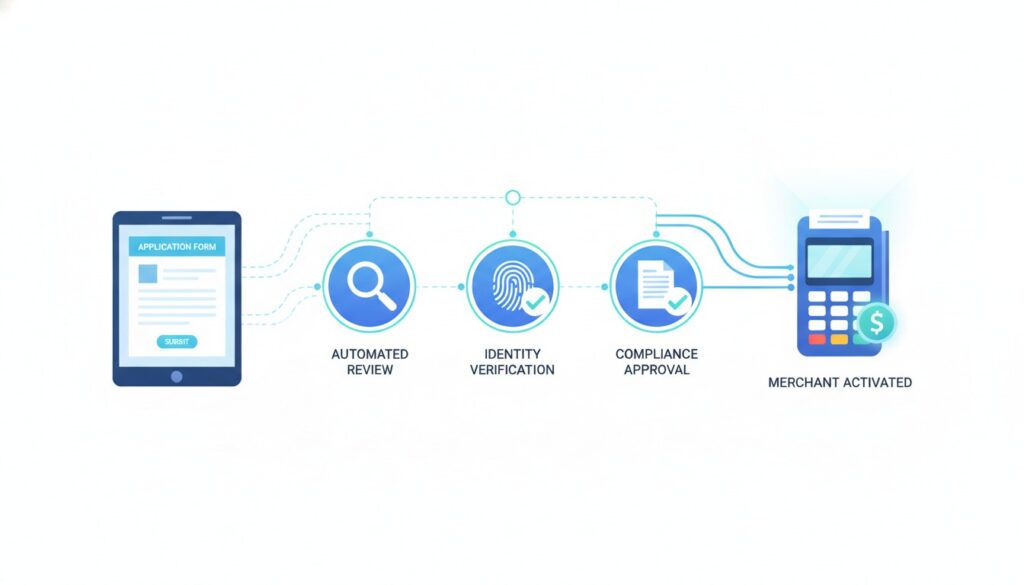
Streamlining Merchant Onboarding with Integrated Payment Solutions
Every day a merchant spends waiting to go live is a day of lost revenue — for them and for the platform that signed them. Traditional merchant onboarding has long been plagued by manual paperwork, fragmented compliance checks, and disjointed technology stacks that stretch the process from days into weeks, sometimes even months. In an era where consumers expect instant everything, that timeline is no longer acceptable.
At sso-tsyts, we’ve been tracking a seismic shift in how payment platforms approach merchant onboarding. Integrated payment solutions are compressing what used to take weeks into a matter of hours — and the implications for business growth, partner satisfaction, and competitive advantage are enormous. In this post, we’ll break down why legacy onboarding is broken, how modern integrated platforms fix it, and what you can do right now to accelerate your own merchant activation pipeline.
The Hidden Cost of Slow Merchant Onboarding
Before diving into solutions, it’s worth understanding just how expensive a sluggish onboarding process really is.
Revenue Leakage
Every additional day in the onboarding queue means:
- Lost transaction volume — merchants can’t process payments, so neither party earns.
- Higher churn risk — frustrated merchants may abandon the process entirely and sign with a competitor.
- Increased support costs — lengthy onboarding generates more status-check tickets and manual follow-ups.
- Digital Application & E-Signature — Merchants complete a single online form. No PDFs, no faxes, no wet signatures.
- Automated KYC/KYB Verification — Identity checks, business registration lookups, beneficial-ownership screening, and sanctions list monitoring happen in real time via third-party data providers.
- Risk & Underwriting Engine — Rule-based and machine-learning models assess merchant risk instantly, auto-approving low-risk applicants and flagging edge cases for human review.
- Provisioning & Configuration — Once approved, the merchant’s account, terminal settings, pricing tiers, and payout schedules are provisioned automatically.
- Developer-Friendly APIs & SDKs — Merchants (or their developers) integrate payment acceptance into websites, apps, or POS systems using well-documented APIs, often with pre-built plugins for popular e-commerce platforms like Shopify, WooCommerce, and Magento.
- Real-Time Dashboard & Reporting — From day one, merchants have visibility into transactions, settlements, chargebacks, and analytics.
- Tier 1 — Instant Approval: Micro-merchants and low-risk categories can be auto-approved with minimal documentation. Set conservative processing limits initially and increase them as transaction history builds trust.
- Tier 2 — Expedited Review: Medium-risk merchants go through automated checks plus a brief manual review, typically completed within 24 hours.
- Tier 3 — Full Underwriting: High-risk or high-volume merchants receive traditional underwriting, but even here, pre-populated data and automated document analysis can cut the timeline in half.
- Business registries (e.g., Secretary of State databases, Companies House)
- Credit bureaus for business and personal credit checks
- Bank account verification services (instant micro-deposit or open-banking APIs)
- Address validation and geocoding
- Run OFAC, PEP, and adverse media screening the moment the merchant submits their application.
- Use document-verification AI to authenticate uploaded IDs, articles of incorporation, and bank statements.
- Trigger ongoing monitoring automatically — not just at onboarding, but throughout the merchant relationship.
- No-code payment links and hosted checkout pages for merchants who don’t have developers.
- Pre-built plugins for major platforms (Shopify, BigCommerce, WooCommerce, Wix).
- Sandbox environments where developers can test integrations before going live.
- Comprehensive API documentation with code samples in multiple languages (`Python`, `JavaScript`, `PHP`, `Ruby`).
- Merchant fills out a paper application (Day 1)
- Sales team manually enters data into the processor’s portal (Day 2–3)
- Underwriting requests additional documents via email (Day 4–7)
- Merchant is approved and receives terminal shipment (Day 10–14)
- Merchant calls support to configure the terminal (Day 15–17)
- Merchant completes a digital application inside the SaaS platform (Minute 1–5)
- Automated KYB and risk scoring approve the merchant (Minute 5–10)
- Payment acceptance is activated within the existing SaaS app (Minute 10–15)
- Merchant processes their first transaction (Minute 15–20)
- Know Your Customer (KYC) and Know Your Business (KYB) requirements vary by jurisdiction. Ensure your automated checks meet the standards of every market you operate in.
- PCI DSS compliance is non-negotiable. Any system that touches cardholder data must meet the Payment Card Industry Data Security Standard.
- Anti-Money Laundering (AML) obligations require ongoing transaction monitoring, not just a one-time check at onboarding.
- Data privacy laws (GDPR, CCPA, etc.) govern how you collect, store, and process merchant and customer data.
- Open Banking & Open Finance — Real-time bank account verification and financial data sharing will eliminate manual document uploads.
- AI-Powered Underwriting — Large language models and advanced ML will enable more nuanced risk assessments with less human intervention.
- Embedded Finance Everywhere — Payments will be embedded into every vertical SaaS platform, marketplace, and app, making onboarding invisible to the end merchant.
- Global-First Platforms — Cross-border onboarding will become seamless, with platforms handling multi-currency, multi-regulatory compliance out of the box.
- Speed drives revenue — for both you and your merchants.
- Automation reduces errors and frees your team to focus on high-value work.
- Compliance and speed are not mutually exclusive when built into the platform architecture.
- Measurement is essential — track your KPIs and relentlessly optimize.
Operational Drag
Manual onboarding doesn’t just hurt merchants; it drains internal resources. Underwriting teams spend hours chasing documents, compliance officers re-key data across multiple systems, and sales teams lose momentum while deals sit in limbo.
“The fastest way to kill a sales pipeline is to make the merchant wait. Speed-to-revenue is the new battleground for payment platforms.” — Emma Davis, sso-tsyts
What “Integrated” Really Means in Modern Payment Onboarding
The word integrated gets thrown around a lot, but in the context of merchant onboarding it refers to a very specific architectural philosophy: unifying every step of the merchant lifecycle — from application to first transaction — into a single, API-driven platform.
Key Components of an Integrated Onboarding Stack
Five Strategies to Slash Your Onboarding Timeline
Whether you’re a payment facilitator (PayFac), an ISO, or a SaaS platform embedding payments, these actionable strategies can help you move merchants from “interested” to “transacting” in record time.
1. Adopt a Tiered Onboarding Model
Not every merchant carries the same risk. A sole proprietor selling handmade candles online is a very different proposition from a high-volume travel agency.
Pro Tip: Define clear, data-driven criteria for each tier. The more objective your rules, the less time underwriters spend debating edge cases.
2. Leverage Pre-Fill and Data Enrichment
Asking a merchant to manually enter their business address, EIN, ownership structure, and bank details is tedious and error-prone. Modern platforms pull much of this information automatically:
3. Embed Compliance Into the Workflow
Compliance shouldn’t be a separate department that reviews applications after the fact. Instead, embed compliance checks directly into the onboarding flow:
4. Provide Self-Service Integration Tools
The technical integration step is often the longest part of onboarding for e-commerce merchants. Reduce friction by offering:
Example: Creating a merchant account via API
POST /v1/merchants { “businessname”: “Sunrise Bakery”, “businesstype”: “sole_proprietorship”, “country”: “US”, “email”: “[email protected]” } “`The goal is to make the path from “approved” to “first live transaction” as short as possible.
5. Measure, Iterate, and Optimize
You can’t improve what you don’t measure. Track these key onboarding KPIs:
| Metric | Target |
|—|—|
| Application-to-approval time | < 4 hours (Tier 1) |
| Approval-to-first-transaction time | < 24 hours |
| Application abandonment rate | < 10% |
| Document re-request rate | < 5% |
| Merchant satisfaction (NPS) | > 60 |
Review these metrics monthly. Identify bottlenecks — is it the KYC step? The bank verification? The integration? — and systematically eliminate them.
Real-World Impact: What Fast Onboarding Looks Like in Practice
Let’s look at a practical scenario. Consider a SaaS platform for fitness studios that decides to embed payments. Before adopting an integrated solution, their onboarding flow looked like this:
After migrating to an integrated PayFac model with automated KYB, instant provisioning, and a pre-built POS app:
That’s not a marginal improvement — it’s a transformation. And it directly translates to faster revenue recognition, higher merchant satisfaction, and a powerful competitive moat.
Navigating Regulatory Considerations
Speed should never come at the expense of compliance. As you streamline onboarding, keep these regulatory guardrails in mind:
The Future of Merchant Onboarding
Looking ahead, several trends will continue to reshape the onboarding landscape:
Conclusion
Merchant onboarding is no longer just an operational process — it’s a strategic differentiator. The platforms that can take a merchant from sign-up to first sale in minutes, not weeks, will win the lion’s share of the market. Integrated payment solutions make this possible by unifying identity verification, risk assessment, provisioning, and integration into a single, automated workflow.
The key takeaways are clear:
Ready to Transform Your Merchant Onboarding?
If your current onboarding process is costing you merchants and revenue, it’s time to rethink your approach. Explore the latest insights, platform reviews, and implementation guides on sso-tsyts to find the integrated payment solution that fits your business model. Subscribe to our newsletter for weekly updates on payment technology trends, and don’t hesitate to reach out — we’re here to help you build a faster, smarter onboarding experience.
Have questions or want to share your own onboarding transformation story? Drop a comment below or connect with us on social media. Let’s build the future of payments together.